A tentative plan for Sunday afternoon had to go out the window after I received a call from my editor requesting that I cover a cello and piano recital in Berkeley. My schedule makes me available for emergency fill-ins like this, so I get a lot of them. My editor didn't want a program with three U.S. premieres to go unobserved by us. And so I observed it.
So there was a lot of new music here, and the performers' reputation as well as the composers' names suggested a pretty austerely modernist program. And indeed it was. Hertz is not a large auditorium, and it was only half full, which in my experience never happens. High modernism is not my favorite style by any means, but after half a century's experience I know how to listen to and evaluate the stuff. Pascal Dusapin can be a pretty good composer, and even not at his most appealing he sounds like he knows what he's doing; Fred Lerdahl is a basic academic modernist of the kind the US is so effective at churning out; the composer I didn't know is one of those guys who writes as if Anton Webern were still alive. I don't know where these people come from. He bears the truly unfortunate first name of Ashkan, and if you're going to say where his music belongs ... well ...
Thoughts of taking BART vanished when I wasn't ready to leave 5 hours before the concert started. So I drove. Although a quiet Sunday afternoon, there was still a huge plug on the Nimitz in Hayward, so I detoured to Hesperian, and arrived in sufficient time for a quick lunch and an even quicker visit to the music library next door to the hall.

Kalimac's corner: a journal by DB
Monday, October 30, 2017

media colonization
is my term for when a movie adaptation drowns out the novel, or the real-life events, that it was based on.
Apologists for movie adaptations are always telling us that the changes they make from the source material are "necessary," though they rarely explain why and even more rarely do so adequately.
Then fine; in that case, I say, let the two go their separate ways and don't confuse the one with the other. But that doesn't happen: the movie drowns out the source.
That's why I wrote my post on Goodbye Christopher Robin. I wasn't there to critique the movie as such, of which I had nothing to say but "rather dull and slow-moving," but to lay out its differences from the records of known facts and the memories of Christopher Milne.
Of course I've been on about this for years regarding the Lord of the Rings movies, whose revisions and changes have infected Tolkien scholarship. Frankenstein, too. It doesn't matter if the book is still on the shelf if the movie is what's in the head.
When I first raised concern over media colonization regarding The Lord of the Rings, which was slightly presciently for the Jackson movies, because it was at a Mythcon panel in August 2001, over 4 months before the first movie came out, my friend Lee thought he had a rebuttal. He stood up and pointed to his t-shirt, which bore a portrait of L. Frank Baum, one of his favorite authors. Baum's Oz, he said, has survived the famous movie adaptation.
Maybe for him and his fellow Oz fanatics, it has. They've virtually memorized every word that Baum, Ruth Plumly Thompson, and everyone else has ever written about the place. I know they have: I've been to their conventions and witnessed their trivia contests.
But, I said, not for the general world, too much of which doesn't know 1) that it's not a dream, 2) that they're not ruby slippers, or even 3) that the book has a different title than the movie.
Another example, a very small but telling one, has been playing out in the newspaper comics the last week, in the strip Luann by Greg Evans. Luann is a college student who's started mentoring a shy 13-year-old girl named Fay. Fay wants to go into theater but was too shy to audition for her school's production of The Wizard of Oz. So Luann is trying to build up her confidence about doing such things.
The thing about Fay is, she's never seen the movie. She doesn't even know it's a musical. But she has read all of Baum's books about it (there's 14 of them, a trivia fact I know from hanging around Oz fans).
So then why does she refer to "the flying monkeys"? In the movie the monkeys aren't called anything, though the Witch tells them to "Fly! Fly!" So if all you know is the movie it's a reasonable extrapolation to call them flying monkeys. But if you've read the book, you'd know that they're called Winged Monkeys, and since the movie doesn't contradict this, writers about the movie who have read the book call them Winged Monkeys when discussing the movie also. Even Wikipedia half-knows that. (It uses both terms.)
I also question Fay's interest in playing Dorothy. Judy Garland was 16 when the movie was filmed, and played Dorothy as somewhat younger, but nowhere near as young as in the book. I don't recall if Baum gives Dorothy's age, but in the illustrations she's a little girl, not even a pre-teen.
Or Fay's interest in Glinda. Glinda is not as important a character in the book as in the movie, where she's an amalgam of two characters from the book. And, of course, Luann dresses Fay up like Glinda from the movie, not Glinda from the book.
OK, it may be a bit much to expect the comic strip to show Fay asking, "What is this costume?" But to have her, wearing it, play out a quote that isn't from the book, and apparently isn't from the 1939 movie either, but one of the recent spinoff movies (though reputedly it's originally from Edward O. Wilson) - well, it shows that Fay isn't the book nerd she pretends to be. She's been infected by media colonization too.
Apologists for movie adaptations are always telling us that the changes they make from the source material are "necessary," though they rarely explain why and even more rarely do so adequately.
Then fine; in that case, I say, let the two go their separate ways and don't confuse the one with the other. But that doesn't happen: the movie drowns out the source.
That's why I wrote my post on Goodbye Christopher Robin. I wasn't there to critique the movie as such, of which I had nothing to say but "rather dull and slow-moving," but to lay out its differences from the records of known facts and the memories of Christopher Milne.
Of course I've been on about this for years regarding the Lord of the Rings movies, whose revisions and changes have infected Tolkien scholarship. Frankenstein, too. It doesn't matter if the book is still on the shelf if the movie is what's in the head.
When I first raised concern over media colonization regarding The Lord of the Rings, which was slightly presciently for the Jackson movies, because it was at a Mythcon panel in August 2001, over 4 months before the first movie came out, my friend Lee thought he had a rebuttal. He stood up and pointed to his t-shirt, which bore a portrait of L. Frank Baum, one of his favorite authors. Baum's Oz, he said, has survived the famous movie adaptation.
Maybe for him and his fellow Oz fanatics, it has. They've virtually memorized every word that Baum, Ruth Plumly Thompson, and everyone else has ever written about the place. I know they have: I've been to their conventions and witnessed their trivia contests.
But, I said, not for the general world, too much of which doesn't know 1) that it's not a dream, 2) that they're not ruby slippers, or even 3) that the book has a different title than the movie.
Another example, a very small but telling one, has been playing out in the newspaper comics the last week, in the strip Luann by Greg Evans. Luann is a college student who's started mentoring a shy 13-year-old girl named Fay. Fay wants to go into theater but was too shy to audition for her school's production of The Wizard of Oz. So Luann is trying to build up her confidence about doing such things.
The thing about Fay is, she's never seen the movie. She doesn't even know it's a musical. But she has read all of Baum's books about it (there's 14 of them, a trivia fact I know from hanging around Oz fans).
So then why does she refer to "the flying monkeys"? In the movie the monkeys aren't called anything, though the Witch tells them to "Fly! Fly!" So if all you know is the movie it's a reasonable extrapolation to call them flying monkeys. But if you've read the book, you'd know that they're called Winged Monkeys, and since the movie doesn't contradict this, writers about the movie who have read the book call them Winged Monkeys when discussing the movie also. Even Wikipedia half-knows that. (It uses both terms.)
I also question Fay's interest in playing Dorothy. Judy Garland was 16 when the movie was filmed, and played Dorothy as somewhat younger, but nowhere near as young as in the book. I don't recall if Baum gives Dorothy's age, but in the illustrations she's a little girl, not even a pre-teen.

Or Fay's interest in Glinda. Glinda is not as important a character in the book as in the movie, where she's an amalgam of two characters from the book. And, of course, Luann dresses Fay up like Glinda from the movie, not Glinda from the book.
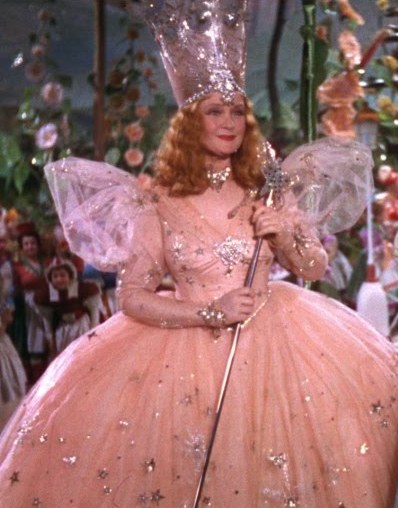
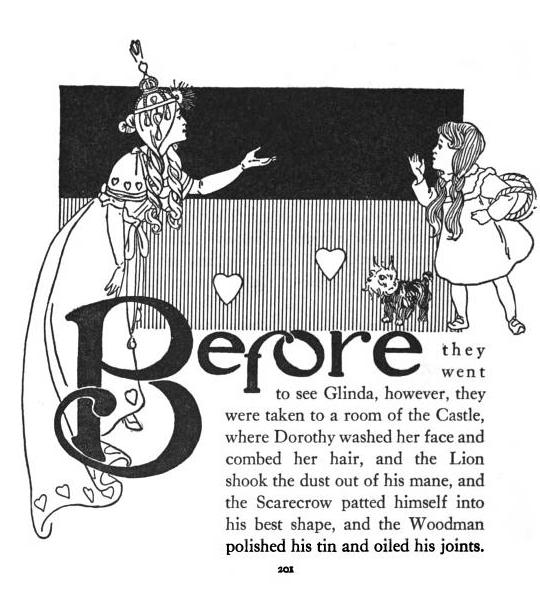
OK, it may be a bit much to expect the comic strip to show Fay asking, "What is this costume?" But to have her, wearing it, play out a quote that isn't from the book, and apparently isn't from the 1939 movie either, but one of the recent spinoff movies (though reputedly it's originally from Edward O. Wilson) - well, it shows that Fay isn't the book nerd she pretends to be. She's been infected by media colonization too.

Saturday, October 28, 2017
good grief, Christopher Robin
I already tried posting this once, but it came out like a fine whine. Let's see if this is better:
The greatest virtue of the movie Goodbye Christopher Robin is that it's rather dull and slow-moving. With luck, it will soon be forgotten and not muddy the already murky waters of confusion any further. It's part meticulous, but mostly Make Stuff Up. Shall we count the ways?
Movie: A.A. Milne witnessed terrible things on the front lines in WW1.
Reality: True. He was on the Somme about three months. He was actually in the same area at the same time as J.R.R. Tolkien, with the same rank doing the same job (signals officer); they were invalided for the same reason (trench fever) and came back to England at the same time, though I couldn't find out if it was on the same ship. The movie doesn't invent them meeting; it missed a bet there.
Movie: After the war, Milne suffered from terrible attacks of PTSD.
Reality: In Movieland, WW1 veteran = PTSD. Not inevitably in reality. What's more, when Milne later wrote about having seen men killed in front of his eyes, he wrote with the same whimsical cheerfulness that he wrote about everything else.
Movie: And writer's block.
Reality: Writer's block? A.A. Milne? Don't put me on.
Movie: So he moves with his family out of the pressure cooker of London to a home in the country.
Reality: They didn't move. They lived in London. The country home was for weekends and holiday getaways, as well-off Londoners have long done.
Movie: His wife, Daphne, is a blunt and outspoken person.
Reality: True, though I know of no source for any of the specific examples in the movie.
Movie: They have a small son whose name is Christopher Robin, but they call him Billy Moon.
Reality: Christopher Milne tells us in his memoir The Enchanted Places that "Billy Moon" was a rare appellation. He was called Billy until about the age of 5. After that his father - and others, but apparently not his mother - called him Moon.
Movie: They hire a nanny named Olive who used to work for the Chilean ambassador.
Reality: True, intriguingly enough.
Movie: A.A. still can't write, so Daphne threatens to leave him.
Reality:
Movie: So - though he's uncomfortable with small children -
Reality: True, though the depiction of him as unsure what to do with a crying baby is probably invented.
Movie: He makes friends with his son with a deliberate plan to develop material.
Reality: Opposite of the truth. He didn't have the knack with small children, remember? He observed his son carefully, but mostly from a distance. As for why children's books, he later explained there wasn't a plan: he's already a protean writer, why not write whatever comes to hand?
Movie: The name "Winnie," short for Winnipeg, comes from a Canadian bear at the zoo.
Reality: True. "Pooh" and "Moon" came from where the movie says they did too. And they really did play Poohsticks.
Movie: The books are wildly successful.
Reality: True. Milne was rather dismayed at having suddenly turned from a famous adult dramatist into a famous children's writer, which the movie doesn't get into.
Movie: There are incessant interviews and photo ops, which the boy hates.
Reality: He often enjoyed these, and his parents kept them under tight control.
Movie: He's devoted to his nanny Olive, and even asks her to marry him instead of her fiancee.
Reality: True.
Movie: She doesn't like being compared to Alice in the books.
Reality: Christopher Milne doesn't say what Olive thought of it, but he's emphatic that she was caring and attentive, not like the distracted Alice.
Movie: Her departure is dramatic and heartbreaking.
Reality: Nonsense. The fiancee was no secret. CRM was nine and went off to boarding school, that's all. He just didn't need a nanny any more. It's a normal part of growing up.
Movie: His boarding school life is literally nothing but merciless, brutal teasing; he calls it "hell."
Reality: He tells us that Christopher Robin's "appearances at school were few. Mostly we were occupied with other things." He did get teased on occasion, and he found this painful, though he says nothing about being thrown downstairs. It didn't bother him to have Christopher Robin mentioned when teasing was not the intent. "But mostly I had other things to think about and didn't bother about being Christopher Robin one way or the other."
Movie: His father ignores him once the books are written.
Reality: Opposite of the truth. As he grew out of nanny-age, son and father became extremely close. The movie's scene of the father teaching his son not to hold his utensils trencherman-style really happened, though in CRM's telling AAM is much wittier than he's shown in the movie.
Movie: CRM joins the army to get away from being Christopher Robin.
Reality: More nonsense. At that stage he had no resentment. He joined, he says, out of a general patriotism that felt Hitler was worth fighting against, a feeling that his father, though he'd previously called himself a pacifist, fully shared.
Movie: A telegram reports him missing presumed dead.
Reality: It said he had been wounded, hit by a shell in the head. It didn't say not seriously. His parents were, naturally, deeply concerned. They were very proud when they heard how calmly he'd taken it.
Movie: After CRM returns from the war, father and son have a reconciliation.
Reality: This is actually when the break occurred between them. CRM had a hard time establishing himself in a career, and became bitter about his father having achieved fame and fortune on his son's back. But the bitterness was never total, and it didn't last. In later life he always disliked being Christopher Robin, but it never dominated his life: he came to terms with it and was willing to discuss it; eventually he even wrote that book explaining the history.
Movie: AAM's biographer Ann Thwaite is listed in the credits as a consultant.
Reality: The posters say "Inspired by a true story." Inspired, but only loosely based on.
The greatest virtue of the movie Goodbye Christopher Robin is that it's rather dull and slow-moving. With luck, it will soon be forgotten and not muddy the already murky waters of confusion any further. It's part meticulous, but mostly Make Stuff Up. Shall we count the ways?
Movie: A.A. Milne witnessed terrible things on the front lines in WW1.
Reality: True. He was on the Somme about three months. He was actually in the same area at the same time as J.R.R. Tolkien, with the same rank doing the same job (signals officer); they were invalided for the same reason (trench fever) and came back to England at the same time, though I couldn't find out if it was on the same ship. The movie doesn't invent them meeting; it missed a bet there.
Movie: After the war, Milne suffered from terrible attacks of PTSD.
Reality: In Movieland, WW1 veteran = PTSD. Not inevitably in reality. What's more, when Milne later wrote about having seen men killed in front of his eyes, he wrote with the same whimsical cheerfulness that he wrote about everything else.
Movie: And writer's block.
Reality: Writer's block? A.A. Milne? Don't put me on.
Movie: So he moves with his family out of the pressure cooker of London to a home in the country.
Reality: They didn't move. They lived in London. The country home was for weekends and holiday getaways, as well-off Londoners have long done.
Movie: His wife, Daphne, is a blunt and outspoken person.
Reality: True, though I know of no source for any of the specific examples in the movie.
Movie: They have a small son whose name is Christopher Robin, but they call him Billy Moon.
Reality: Christopher Milne tells us in his memoir The Enchanted Places that "Billy Moon" was a rare appellation. He was called Billy until about the age of 5. After that his father - and others, but apparently not his mother - called him Moon.
Movie: They hire a nanny named Olive who used to work for the Chilean ambassador.
Reality: True, intriguingly enough.
Movie: A.A. still can't write, so Daphne threatens to leave him.
Reality:
Movie: So - though he's uncomfortable with small children -
Reality: True, though the depiction of him as unsure what to do with a crying baby is probably invented.
Movie: He makes friends with his son with a deliberate plan to develop material.
Reality: Opposite of the truth. He didn't have the knack with small children, remember? He observed his son carefully, but mostly from a distance. As for why children's books, he later explained there wasn't a plan: he's already a protean writer, why not write whatever comes to hand?
Movie: The name "Winnie," short for Winnipeg, comes from a Canadian bear at the zoo.
Reality: True. "Pooh" and "Moon" came from where the movie says they did too. And they really did play Poohsticks.
Movie: The books are wildly successful.
Reality: True. Milne was rather dismayed at having suddenly turned from a famous adult dramatist into a famous children's writer, which the movie doesn't get into.
Movie: There are incessant interviews and photo ops, which the boy hates.
Reality: He often enjoyed these, and his parents kept them under tight control.
Movie: He's devoted to his nanny Olive, and even asks her to marry him instead of her fiancee.
Reality: True.
Movie: She doesn't like being compared to Alice in the books.
Reality: Christopher Milne doesn't say what Olive thought of it, but he's emphatic that she was caring and attentive, not like the distracted Alice.
Movie: Her departure is dramatic and heartbreaking.
Reality: Nonsense. The fiancee was no secret. CRM was nine and went off to boarding school, that's all. He just didn't need a nanny any more. It's a normal part of growing up.
Movie: His boarding school life is literally nothing but merciless, brutal teasing; he calls it "hell."
Reality: He tells us that Christopher Robin's "appearances at school were few. Mostly we were occupied with other things." He did get teased on occasion, and he found this painful, though he says nothing about being thrown downstairs. It didn't bother him to have Christopher Robin mentioned when teasing was not the intent. "But mostly I had other things to think about and didn't bother about being Christopher Robin one way or the other."
Movie: His father ignores him once the books are written.
Reality: Opposite of the truth. As he grew out of nanny-age, son and father became extremely close. The movie's scene of the father teaching his son not to hold his utensils trencherman-style really happened, though in CRM's telling AAM is much wittier than he's shown in the movie.
Movie: CRM joins the army to get away from being Christopher Robin.
Reality: More nonsense. At that stage he had no resentment. He joined, he says, out of a general patriotism that felt Hitler was worth fighting against, a feeling that his father, though he'd previously called himself a pacifist, fully shared.
Movie: A telegram reports him missing presumed dead.
Reality: It said he had been wounded, hit by a shell in the head. It didn't say not seriously. His parents were, naturally, deeply concerned. They were very proud when they heard how calmly he'd taken it.
Movie: After CRM returns from the war, father and son have a reconciliation.
Reality: This is actually when the break occurred between them. CRM had a hard time establishing himself in a career, and became bitter about his father having achieved fame and fortune on his son's back. But the bitterness was never total, and it didn't last. In later life he always disliked being Christopher Robin, but it never dominated his life: he came to terms with it and was willing to discuss it; eventually he even wrote that book explaining the history.
Movie: AAM's biographer Ann Thwaite is listed in the credits as a consultant.
Reality: The posters say "Inspired by a true story." Inspired, but only loosely based on.
Wednesday, October 25, 2017
three concerts
1. San Francisco Symphony, Thursday. The return of Krzysztof Urbański, with more Slavic music. Dvořák cello concerto, slightly less boring than usual, but I didn't care for the cellist's tone. Also, the Lutoslawski Concerto for Orchestra, a piece I respect more than like, but it was a very crisp, pleasing, and impressive performance. One of my colleagues reviewed this.
2. Oakland Symphony, Friday. First concert of the season. Birthday celebration for music director Michael Morgan. I wrote a thanks on a a giant birthday card for him, and signed it with "your agemate." Asst. conductor led the orchestra in playing "Happy Birthday." No National Anthem, thank ghu. I went to this concert for the rare chance to hear Shostakovich's Fifteenth, an enigmatic, hushed, introverted symphony, which made an odd pair with Beethoven's Fifth, a forthright, loud, extroverted symphony. But they were both fairly well played. Another colleague of mine reviewed this.
I go to Oakland concerts when they're playing something I really want to hear, because they're not physically easy for me to get to; but I may stop if I get any more phone calls like the one I got from them this morning, which when I gave this explanation tried to argue me into thinking that all the rest of the season's concerts are equally fascinating to me.
3. Symphony Silicon Valley, Saturday. Brahms Third and the Khachaturian Violin Concerto, two pieces I like but wouldn't travel to Oakland for. I would, however, travel to San Jose for them, and glad I did, because they were beautifully done. Returning soloist Mayuko Kamio had as weird and peculiar a sound as ever, but plays it well, and first-time visiting conductor Mei-Ann Chen was a truly impressive leader. This concert, ta-da, was reviewed by me.
A couple things on the review. About the blooper on the last chord, I wound up writing, "Technically, the playing was nearly flawless until just before the end when a few missteps crept in," because I think I caught another glitch a little earlier. It sounded like the entire wind section momentarily put its foot wrong, as it were. It could have been a hidden inner voice revealed by the exposed playing style, but it didn't sound like something Brahms would do, and though I didn't recall the exact moment it happened I couldn't find anything in the score when I checked later, so I'm going with the assumption.
Also, I noted that Chen was the only first-time conductor on this year's roster. (Last season they had 2, the season before none.) What I did not note, but could have if I'd chosen to play that card, is that she's also the only woman to conduct here in three years. (Actually, I'd forgotten it was that long since Karen Kamensek last appeared.) I could also have made irony out of the difference in programming between the new music and women composers featured at Chen's home base and the conservative program here, but in fact I have mixed feelings about that. I'm in favor of newer and unusual music, and that's what I go to Oakland for; and I put up with a feeble local amateur group because they were doing an all-women composer program, but I also believe that music is a performing art, and even the hoariest of classics only lives at all because people still play it. So bring on the Brahms, because he's as great as his reputation says; and the Khachaturian, which is nowhere near as much of a warhorse as it used to be.
2. Oakland Symphony, Friday. First concert of the season. Birthday celebration for music director Michael Morgan. I wrote a thanks on a a giant birthday card for him, and signed it with "your agemate." Asst. conductor led the orchestra in playing "Happy Birthday." No National Anthem, thank ghu. I went to this concert for the rare chance to hear Shostakovich's Fifteenth, an enigmatic, hushed, introverted symphony, which made an odd pair with Beethoven's Fifth, a forthright, loud, extroverted symphony. But they were both fairly well played. Another colleague of mine reviewed this.
I go to Oakland concerts when they're playing something I really want to hear, because they're not physically easy for me to get to; but I may stop if I get any more phone calls like the one I got from them this morning, which when I gave this explanation tried to argue me into thinking that all the rest of the season's concerts are equally fascinating to me.
3. Symphony Silicon Valley, Saturday. Brahms Third and the Khachaturian Violin Concerto, two pieces I like but wouldn't travel to Oakland for. I would, however, travel to San Jose for them, and glad I did, because they were beautifully done. Returning soloist Mayuko Kamio had as weird and peculiar a sound as ever, but plays it well, and first-time visiting conductor Mei-Ann Chen was a truly impressive leader. This concert, ta-da, was reviewed by me.
A couple things on the review. About the blooper on the last chord, I wound up writing, "Technically, the playing was nearly flawless until just before the end when a few missteps crept in," because I think I caught another glitch a little earlier. It sounded like the entire wind section momentarily put its foot wrong, as it were. It could have been a hidden inner voice revealed by the exposed playing style, but it didn't sound like something Brahms would do, and though I didn't recall the exact moment it happened I couldn't find anything in the score when I checked later, so I'm going with the assumption.
Also, I noted that Chen was the only first-time conductor on this year's roster. (Last season they had 2, the season before none.) What I did not note, but could have if I'd chosen to play that card, is that she's also the only woman to conduct here in three years. (Actually, I'd forgotten it was that long since Karen Kamensek last appeared.) I could also have made irony out of the difference in programming between the new music and women composers featured at Chen's home base and the conservative program here, but in fact I have mixed feelings about that. I'm in favor of newer and unusual music, and that's what I go to Oakland for; and I put up with a feeble local amateur group because they were doing an all-women composer program, but I also believe that music is a performing art, and even the hoariest of classics only lives at all because people still play it. So bring on the Brahms, because he's as great as his reputation says; and the Khachaturian, which is nowhere near as much of a warhorse as it used to be.
Saturday, October 21, 2017
symphonic variations
Here's the problem I'm facing now:
The orchestra of modest prestige was surpassing itself with a flawless, even revelatory, performance of the great symphony. It ends with an elegant, quiet, dying fall. And on the final note: BLAT!
I can't avoid alluding to this somehow, so how do I bring it up in my review?
The orchestra of modest prestige was surpassing itself with a flawless, even revelatory, performance of the great symphony. It ends with an elegant, quiet, dying fall. And on the final note: BLAT!
I can't avoid alluding to this somehow, so how do I bring it up in my review?
the world according to cat
Seeking insights in The Trainable Cat by Bradshaw and Ellis, I found this:
I can testify to the motivation in which "every cat works out for himself which meow produces the desired result," because I could hear our former cat Pandora trying it out on the drive to the vet. She would meow constantly, using a variety of pitches, lengths, and other variables, in evident hope of hitting upon the one that would persuade us to turn around and take her home.
Maia, however, didn't begin to meow until fully into adulthood, and has no special code. She comes into my office and meows in the same general way whenever she wants something, and since she only ever wants three things - food, petting (actually scritching and nuzzling), or playing with a peacock feather - I determine which she wants by where she goes on leading me out of the office.
If she wants food, she goes to the hall bathroom, where her dish is kept. If she wants petting she goes to the bedroom, because she's learned that petting only takes place on top of the bed, where cat and I can most easily be on the same level. If she wants playing, she flops down on the hall landing, which is cue for me to go halfway downstairs, fetch the feather from on top of a downstairs bookcase, and waggle it at her through the railing. Maia is the laziest huntress in the feline kingdom, her method of chasing the feather consisting of lying on the floor on her back and wiggling all four paws at it.
As an illustration of just how flexible their behavior is [in their third month], one of the skills that young cats learn during this period is how to get our attention, specifically by meowing. This socialization is so characteristic of cats that it is often presumed to be instinctive. However, feral cat colonies are generally rather silent places, the cats communicating mainly by body language and scent, and not vocally: cats generally reserve this sound for communicating with humans. Young kittens instinctively meow to their mother to attract her attention, but she stops responding when she wants to wean them, and when they discover that calling out to her no longer provokes a reaction, they stop doing it. However, the meow, though dormant, evidently remains in their repertoire, and as they adapt to their new home, cats find that meowing has become effective once more, this time in attracting the attention of our own species.The book goes on to say that meowing becomes an idiolect, with meows for different purposes understandable by each cat and owner but meaningless to anyone else.
I can testify to the motivation in which "every cat works out for himself which meow produces the desired result," because I could hear our former cat Pandora trying it out on the drive to the vet. She would meow constantly, using a variety of pitches, lengths, and other variables, in evident hope of hitting upon the one that would persuade us to turn around and take her home.
Maia, however, didn't begin to meow until fully into adulthood, and has no special code. She comes into my office and meows in the same general way whenever she wants something, and since she only ever wants three things - food, petting (actually scritching and nuzzling), or playing with a peacock feather - I determine which she wants by where she goes on leading me out of the office.
If she wants food, she goes to the hall bathroom, where her dish is kept. If she wants petting she goes to the bedroom, because she's learned that petting only takes place on top of the bed, where cat and I can most easily be on the same level. If she wants playing, she flops down on the hall landing, which is cue for me to go halfway downstairs, fetch the feather from on top of a downstairs bookcase, and waggle it at her through the railing. Maia is the laziest huntress in the feline kingdom, her method of chasing the feather consisting of lying on the floor on her back and wiggling all four paws at it.
Friday, October 20, 2017
items
1. I just finished a work project that had been hanging over me for two months. It's not like it took that long to do the work, just that it was hard to face doing it. It's a detailed critique of a paper whose author had taken extremely ill to my temerity in giving initial reports of errors and unclear material. What reaction I get to the full report will determine what happens next.
I got lots done in the interim, but it was all small or extremely time-bound projects. Bigger jobs I should have gotten started on, I thought, "No, I have to get this done first." Didn't help.
2. Took All the Birds in the Sky by Charlie Jane Anders to read on the way to a concert last night. (More on the concert later.) I'd also seen somebody reading it at last weekend's brass quintet concert. It took me until the end of the YA section at the beginning to figure out what other author that section was strongly reminding me of. Not at all Cory Doctorow or Jo Walton, Anders' stated inspirations for that part (and I've read the relevant books by both). Look: juvenile characters, trying to run their lives around their oblivious parents. Extremely ordinary mundane opening setting and situation, and then Really Weird Stuff starts happening which the characters have to deal with without freaking out. A subtle but pervasive wacky goofiness underneath. And all told in a plain, clear, almost over-simple language. Who is this like? (Doctorow is more didactic than this, Walton more elusive.) The author I'm thinking of is very American, whom Brits may not know, but I think most of my American readers will have read this person. Clue: has a cult following. Can you guess?
3. And while up in the City, dinner at a Nicaraguan restaurant. Why not? I never had before. Liked me them Nicaraguan tamales, which have rice in the light masa mix, and a big hunk of pork inside, plus olives and sliced tomatoes. It occurs to me that, of however many countries there are in Latin America and the Caribbean (at least 40, counting the more important island colonies), I've now eaten in restaurants representing only ten of them. I should collect some more - easy to do in the City - despite many of the countries being tropical, which means a fondness for plantains and yucca, which I don't like.
4. What I most miss from my old XP computer is the solitaire game. I hate the newer versions, which have ugly designs and which, when you pick up a card from the tableau, automatically turn over the face-down card beneath it. I hate that. I don't want computers that play the game for me. If they do, why am I there at all? All I want the computer to do for me is shuffle, which with physical cards I am incapable of. (One of many sporting tasks I can't do. I can hit a golf ball, a volleyball, or a bowling pin: that's about it. At tennis, ping-pong, or softball I am beyond hopeless.)
Anyway, there's lots of instructions online for getting the good solitaire on a newer computer, but they all start with porting it from your old XP, and I no longer have my old XP. But, aha! I finally found the right game downloadable online. It's here. It's not perfect - if you make it full screen, the cards don't get larger, just further apart - but it's what I want.
5. Astonishing analysis - by William Saletan, who does politico-cultural analysis as well as anyone - of how moral conservatives can bring themselves to defend Trump. It's easy. You just abandon every moral principle you've ever advocated, and turn it all upside down.
6. The moving story of a cartoonist who lost his home in the Santa Rosa fires, told in his chosen medium.
I got lots done in the interim, but it was all small or extremely time-bound projects. Bigger jobs I should have gotten started on, I thought, "No, I have to get this done first." Didn't help.
2. Took All the Birds in the Sky by Charlie Jane Anders to read on the way to a concert last night. (More on the concert later.) I'd also seen somebody reading it at last weekend's brass quintet concert. It took me until the end of the YA section at the beginning to figure out what other author that section was strongly reminding me of. Not at all Cory Doctorow or Jo Walton, Anders' stated inspirations for that part (and I've read the relevant books by both). Look: juvenile characters, trying to run their lives around their oblivious parents. Extremely ordinary mundane opening setting and situation, and then Really Weird Stuff starts happening which the characters have to deal with without freaking out. A subtle but pervasive wacky goofiness underneath. And all told in a plain, clear, almost over-simple language. Who is this like? (Doctorow is more didactic than this, Walton more elusive.) The author I'm thinking of is very American, whom Brits may not know, but I think most of my American readers will have read this person. Clue: has a cult following. Can you guess?
3. And while up in the City, dinner at a Nicaraguan restaurant. Why not? I never had before. Liked me them Nicaraguan tamales, which have rice in the light masa mix, and a big hunk of pork inside, plus olives and sliced tomatoes. It occurs to me that, of however many countries there are in Latin America and the Caribbean (at least 40, counting the more important island colonies), I've now eaten in restaurants representing only ten of them. I should collect some more - easy to do in the City - despite many of the countries being tropical, which means a fondness for plantains and yucca, which I don't like.
4. What I most miss from my old XP computer is the solitaire game. I hate the newer versions, which have ugly designs and which, when you pick up a card from the tableau, automatically turn over the face-down card beneath it. I hate that. I don't want computers that play the game for me. If they do, why am I there at all? All I want the computer to do for me is shuffle, which with physical cards I am incapable of. (One of many sporting tasks I can't do. I can hit a golf ball, a volleyball, or a bowling pin: that's about it. At tennis, ping-pong, or softball I am beyond hopeless.)
Anyway, there's lots of instructions online for getting the good solitaire on a newer computer, but they all start with porting it from your old XP, and I no longer have my old XP. But, aha! I finally found the right game downloadable online. It's here. It's not perfect - if you make it full screen, the cards don't get larger, just further apart - but it's what I want.
5. Astonishing analysis - by William Saletan, who does politico-cultural analysis as well as anyone - of how moral conservatives can bring themselves to defend Trump. It's easy. You just abandon every moral principle you've ever advocated, and turn it all upside down.
6. The moving story of a cartoonist who lost his home in the Santa Rosa fires, told in his chosen medium.
Thursday, October 19, 2017
English suites no. 9
A fairly well-known suite by an otherwise obscure composer, Peter Warlock's Capriol Suite is from a favorite genre of mine, 20th-century retellings of much older music. It's a selection of French Renaissance dances from the collection of Thoinot Arbeau, faithfully transcribed, but with touches of orchestration that make it Warlock's own, particularly in spicing it up. For instance, that pungent chord at 0.12 is intentional, and not the result of the players' wobbliness, which I chose this performance in spite of, preferring the vigor and energy of this rendition above others. There's a lot more pungent dissonance in the finale.
The very brief movements are Basse-Danse (0:00), Pavane (1:24), Tordion (3:26), Bransles (4:33), Pieds-en-l'air (6:37), and Mattachins (Sword Dance) (9:30).
Literary authors writing under pen names is fairly common, and not just among women hiding as men: Mark Twain, O. Henry, George Orwell, Cordwainer Smith ... But though there have been musical forgeries from time to time, Peter Warlock is the only composer of any note I can think of who was a pen name. The choice of name either reflected his interest in the occult or didn't, depending on who you read; his legal name, Philip Heseltine, he used only on his critical and scholarly writings, in which he specialized in studying Renaissance music.
The very brief movements are Basse-Danse (0:00), Pavane (1:24), Tordion (3:26), Bransles (4:33), Pieds-en-l'air (6:37), and Mattachins (Sword Dance) (9:30).
Literary authors writing under pen names is fairly common, and not just among women hiding as men: Mark Twain, O. Henry, George Orwell, Cordwainer Smith ... But though there have been musical forgeries from time to time, Peter Warlock is the only composer of any note I can think of who was a pen name. The choice of name either reflected his interest in the occult or didn't, depending on who you read; his legal name, Philip Heseltine, he used only on his critical and scholarly writings, in which he specialized in studying Renaissance music.
Wednesday, October 18, 2017
Christopher Robin, hello
There's a movie coming out called Goodbye Christopher Robin, one of those modern historical dramas so popular recently. It's a genre I'm very susceptible to, so I'll go see this one.
But before I have to throw in a comparison of the movie with reality, I'd better triangulate reality with the general impression of it. For The Enchanted Places, Christopher Milne's memoir of his childhood and the story behind the books, is the most seriously and comprehensively misread book that I know. This is pervasive; it's not just one or two cases. People read it, but what they get out of it isn't there.
You know the basics. A.A. Milne, successful dramatist and humorist, published between 1924 and 1928 four children's books of fanciful poetry and stories inspired by, and using the real name of, his small son Christopher Robin and his collection of stuffed toy animals. They became huge and lasting successes, to some irritation of the author who preferred to be known for more serious or adult work, and to his son, who, as the end of The House at Pooh Corner points out, did not remain a small boy playing with stuffed toys.
That part's true, but a mistaken emphasis on the irritation has created false stories of a bizarrely dysfunctional, but imaginary, family out of the memoir that Christopher Milne, as in adulthood he preferred to be known, published half a century later in 1974. (I'm citing the 1975 US edition from Dutton.)
False story #1: That A.A. Milne was a cold and distant father with no interest and little contact with his son as a real person.
Partial truth to this: That as a small child, Christopher was largely raised by a nanny. This was absolutely standard practice in upper and middle-class families in Britain at the time, and for many generations earlier. Some parents were cold and distant, some were warm and loving. They all had nannies. You can prove nothing from this. The Milnes, at least, were not the kind of parents who only see their child for a few minutes at bedtime and allow no real interaction then, though they've been falsely accused of that.
Another partial truth to it: AAM did not have a gift for playing with and relating to small children. (Not the only renowned male children's author of whom this was true: Dr. Seuss was positively uneasy with small children in a way that Milne was not.)
But CRM is not resentful. He calls his childhood "happy" (p. 5) and is sympathetic to his father: "Some people are good with children. Others are not. It is a gift. You either have it or you don't. My father didn't. ... My father was a creative writer and so it was precisely because he was not able to play with his small son that his longings sought and found satisfaction in another direction." (p. 36)
But CRM also says that this applied only to nursery days. "Later on it was different, very different." (p. 36) And he proves this with extensive anecdote throughout the book. First, AAM did have the courtesy to arrange for the nursery visits of an acquaintance whom the boy called Soldier, who did have that knack with children (ch. 4) Even from when CRM was still small, the book tells some remarkable anecdotes showing AAM as a father of both sensitivity and wit. My favorite is this:
A further warp, and yes I've actually seen this claimed, is that "his dad bought him Tigger because he wanted to see what personality young Christopher gave him -- in other words, A.A. was not being a thoughtful dad but seeking copy as a writer." That is an unjust insinuation worthy of a cruel prosecutor. Here's what CRM actually says: "Both Kanga and Tigger were later arrivals, presents from my parents, carefully chosen, not just for the delight they might give to their new owner, but also for their literary possibilities." (p. 77) So the charge is as if it was just his father. As if the parents couldn't have both motives, of being thoughtful and generating ideas. As if there's anything wrong in AAM's hoping he might get a story out of this. People post amusing videos of their children on YouTube all the time, and I hope you can tell the difference between the ones who are actually exploiting and abusing their children and those who are just delighted to share something amusing.
False story #2: That Christopher Milne spent his life in burning resentment of his father exploiting him as a literary character.
What people who purvey this are thinking of is a passage in the epilogue to The Enchanted Places in which CRM recounts a shadow that came between him and his father in the post-war years when he struggled to find a job and a career. "In pessimistic moments ... it seemed to me, almost, that my father ... had filched from me my good name and had left me with nothing but the empty fame of being his son." (p. 165) Emphases added. CRM is not fully endorsing this bitter view, even for the time period that he had it. Eventually he realized that "If I wanted to escape from Christopher Robin, so, too, did he." (p. 166) AAM's burden, of course, was being known just for that, or having his other works judged only in that context.
As a boy, CRM would sometimes be teased by other boys over Christopher Robin. But that wasn't a heavy burden. If it weren't that, they'd find some other excuse to tease. CRM is clear that this was no more than an occasional irritant: Its "appearances at school were few. Mostly we were occupied with other things ... mostly I had other things to think about ... it never occurred to me that perhaps I ought to be blaming somebody for it all. ... My relations with my father were quite unaffected." (p. 163-64)
In adulthood, he retained continued discomfort with Christopher Robin, but it's something he came to terms with; it could hardly have been otherwise once he settled on a career as a bookseller (as was pointed out to him by his mother, "who always hit the nail on the head no matter whose fingers were in the way," p. 167). All he says about its place in his maturity is that "posing as Christopher Robin does today make me feel ill at ease" (p. 5) and "he still fills me with acute embarrassment ... after years of practice I am still terribly bad at this sort of thing" (p. 168). That's only acceptance insofar as he was willing to tell the story in his book, instead of hiding out altogether; but it's far removed from the kind of burning resentment, especially of his father (to whose memory he dedicated both his second and third books), of the brief spasm of 1947 and of the false story.
I hope, probably in vain, that we can have done with the misreadings of the book, before whatever misreadings generated by the movie descend on us.
But before I have to throw in a comparison of the movie with reality, I'd better triangulate reality with the general impression of it. For The Enchanted Places, Christopher Milne's memoir of his childhood and the story behind the books, is the most seriously and comprehensively misread book that I know. This is pervasive; it's not just one or two cases. People read it, but what they get out of it isn't there.
You know the basics. A.A. Milne, successful dramatist and humorist, published between 1924 and 1928 four children's books of fanciful poetry and stories inspired by, and using the real name of, his small son Christopher Robin and his collection of stuffed toy animals. They became huge and lasting successes, to some irritation of the author who preferred to be known for more serious or adult work, and to his son, who, as the end of The House at Pooh Corner points out, did not remain a small boy playing with stuffed toys.
That part's true, but a mistaken emphasis on the irritation has created false stories of a bizarrely dysfunctional, but imaginary, family out of the memoir that Christopher Milne, as in adulthood he preferred to be known, published half a century later in 1974. (I'm citing the 1975 US edition from Dutton.)
False story #1: That A.A. Milne was a cold and distant father with no interest and little contact with his son as a real person.
Partial truth to this: That as a small child, Christopher was largely raised by a nanny. This was absolutely standard practice in upper and middle-class families in Britain at the time, and for many generations earlier. Some parents were cold and distant, some were warm and loving. They all had nannies. You can prove nothing from this. The Milnes, at least, were not the kind of parents who only see their child for a few minutes at bedtime and allow no real interaction then, though they've been falsely accused of that.
Another partial truth to it: AAM did not have a gift for playing with and relating to small children. (Not the only renowned male children's author of whom this was true: Dr. Seuss was positively uneasy with small children in a way that Milne was not.)
But CRM is not resentful. He calls his childhood "happy" (p. 5) and is sympathetic to his father: "Some people are good with children. Others are not. It is a gift. You either have it or you don't. My father didn't. ... My father was a creative writer and so it was precisely because he was not able to play with his small son that his longings sought and found satisfaction in another direction." (p. 36)
But CRM also says that this applied only to nursery days. "Later on it was different, very different." (p. 36) And he proves this with extensive anecdote throughout the book. First, AAM did have the courtesy to arrange for the nursery visits of an acquaintance whom the boy called Soldier, who did have that knack with children (ch. 4) Even from when CRM was still small, the book tells some remarkable anecdotes showing AAM as a father of both sensitivity and wit. My favorite is this:
Once, when I was quite little, he came up the nursery while I was having my lunch. And while he was talking I paused between mouthfuls, resting my hands on the table, knife and fork pointing upwards. "You oughtn't really to sit like that," he said, gently. "Why not?" I asked, surprised. "Well ..." He hunted around for a reason he could give. Because it's considered bad manners? Because you musn't? Because ... "Well," he said, looking in the direction that my fork was pointing. "Suppose somebody suddenly fell through the ceiling. They might land on your fork and that would be very painful." (p. 120-21)That's the species of wit I'd like to show with small children, and have very occasionally had the luck to come up with. And that was in the deprecated nursery days! Read the father gently correcting a factual error the son had been taught in school (p. 119-20) or the truly extraordinary way he weaned his son, then aged about ten, from an interest in shooting (ch. 21). And the cherished family holidays (ch. 22). The son says he and his father were very close for many years, and there's plenty to back this up. When CRM was in his 20s, his father sent him philosophical books, hoping the son would share his beliefs but not pressing him to do so (p. 142-44); this is discussed in CRM's third book, The Hollow in the Hill, which is not really a memoir but, as its subtitle states, "The search for a personal philosophy." In his second book, The Path Through the Trees, which is a memoir and a sequel to The Enchanted Places, there's lengthy discussion of AAM's role in helping CRM join the Army in WW2 and in his positive enthusiasm in helping the son realize his aptness for and to qualify for his post as a sapper, a combat engineer; and post-war pulled strings in the book industry to help CRM get set up as a bookseller.
A further warp, and yes I've actually seen this claimed, is that "his dad bought him Tigger because he wanted to see what personality young Christopher gave him -- in other words, A.A. was not being a thoughtful dad but seeking copy as a writer." That is an unjust insinuation worthy of a cruel prosecutor. Here's what CRM actually says: "Both Kanga and Tigger were later arrivals, presents from my parents, carefully chosen, not just for the delight they might give to their new owner, but also for their literary possibilities." (p. 77) So the charge is as if it was just his father. As if the parents couldn't have both motives, of being thoughtful and generating ideas. As if there's anything wrong in AAM's hoping he might get a story out of this. People post amusing videos of their children on YouTube all the time, and I hope you can tell the difference between the ones who are actually exploiting and abusing their children and those who are just delighted to share something amusing.
False story #2: That Christopher Milne spent his life in burning resentment of his father exploiting him as a literary character.
What people who purvey this are thinking of is a passage in the epilogue to The Enchanted Places in which CRM recounts a shadow that came between him and his father in the post-war years when he struggled to find a job and a career. "In pessimistic moments ... it seemed to me, almost, that my father ... had filched from me my good name and had left me with nothing but the empty fame of being his son." (p. 165) Emphases added. CRM is not fully endorsing this bitter view, even for the time period that he had it. Eventually he realized that "If I wanted to escape from Christopher Robin, so, too, did he." (p. 166) AAM's burden, of course, was being known just for that, or having his other works judged only in that context.
As a boy, CRM would sometimes be teased by other boys over Christopher Robin. But that wasn't a heavy burden. If it weren't that, they'd find some other excuse to tease. CRM is clear that this was no more than an occasional irritant: Its "appearances at school were few. Mostly we were occupied with other things ... mostly I had other things to think about ... it never occurred to me that perhaps I ought to be blaming somebody for it all. ... My relations with my father were quite unaffected." (p. 163-64)
In adulthood, he retained continued discomfort with Christopher Robin, but it's something he came to terms with; it could hardly have been otherwise once he settled on a career as a bookseller (as was pointed out to him by his mother, "who always hit the nail on the head no matter whose fingers were in the way," p. 167). All he says about its place in his maturity is that "posing as Christopher Robin does today make me feel ill at ease" (p. 5) and "he still fills me with acute embarrassment ... after years of practice I am still terribly bad at this sort of thing" (p. 168). That's only acceptance insofar as he was willing to tell the story in his book, instead of hiding out altogether; but it's far removed from the kind of burning resentment, especially of his father (to whose memory he dedicated both his second and third books), of the brief spasm of 1947 and of the false story.
I hope, probably in vain, that we can have done with the misreadings of the book, before whatever misreadings generated by the movie descend on us.
Tuesday, October 17, 2017
museum visit
Our friend E. recommended the exhibit on Teotihuacan current at the de Young Museum in the City. So, B. having the day off work today, we went. It's a pleasure to have such things within the range of doing on impulse without prior notice.
Most of the Mexican pyramidal sites that people know are in the Yucatan, but this one is in the central highlands near Mexico City. It predates the Aztecs, but whether it was built by their ancestors or someone else is unknown. It's been excavated for over a century, but a lot of valuable material has recently been discovered in tunnels.
I was most attracted to the carvings in serpentine, jade, onyx, and other stones, but there were also a lot of intriguing ceramic pieces, carvings on large conch shells, etc. One of their favorite images was the feathered serpent, sometimes depicted on wall murals at 6 to 8 foot length, and just begging to be incorporated into a fantasy novel. (It's been done, by Kenneth Morris and perhaps others I don't recall.) There were also feathered felines (the captions used the word feline for all such creatures, whether feathered or not, as their resemblance to what we'd call cats was elusive), birds with hands, and people with ghostly imperturbable expressions akin to those of moai statues, carved from stone but with eyes of shell or pyrite. It was all memorable and distinctive stuff.
We added a successful browse through both of the museum's gift shops, and then drove down, out of Golden Gate Park where the de Young is located, to Borderlands in the Mission district, passing by a whim past their future site on Haight a couple blocks east of Ashbury, to which they're in the process of buying the freehold; this turned out to be a better route to the current store than the one I'd been previously contemplating. There we had cider in the attached cafe - ah, fall! when the cider blooms - while waiting for the store to open at noon, where we bought more books.
Lunch at a Mexican place in South City where I'd been before, and then home, and that was our half-day out.
Most of the Mexican pyramidal sites that people know are in the Yucatan, but this one is in the central highlands near Mexico City. It predates the Aztecs, but whether it was built by their ancestors or someone else is unknown. It's been excavated for over a century, but a lot of valuable material has recently been discovered in tunnels.
I was most attracted to the carvings in serpentine, jade, onyx, and other stones, but there were also a lot of intriguing ceramic pieces, carvings on large conch shells, etc. One of their favorite images was the feathered serpent, sometimes depicted on wall murals at 6 to 8 foot length, and just begging to be incorporated into a fantasy novel. (It's been done, by Kenneth Morris and perhaps others I don't recall.) There were also feathered felines (the captions used the word feline for all such creatures, whether feathered or not, as their resemblance to what we'd call cats was elusive), birds with hands, and people with ghostly imperturbable expressions akin to those of moai statues, carved from stone but with eyes of shell or pyrite. It was all memorable and distinctive stuff.
We added a successful browse through both of the museum's gift shops, and then drove down, out of Golden Gate Park where the de Young is located, to Borderlands in the Mission district, passing by a whim past their future site on Haight a couple blocks east of Ashbury, to which they're in the process of buying the freehold; this turned out to be a better route to the current store than the one I'd been previously contemplating. There we had cider in the attached cafe - ah, fall! when the cider blooms - while waiting for the store to open at noon, where we bought more books.
Lunch at a Mexican place in South City where I'd been before, and then home, and that was our half-day out.
Subscribe to:
Posts (Atom)