I had two reviews in SFCV this week. Both of them were of concerts featuring music by Samuel Barber.
For the first review, amongst all the fluff that constitutes the SF Symphony's summer season, they did put on one substantive concert in the style of winter subscription concerts. And the focus was on the attractive but hardly crowd-favorite Barber Violin Concerto.
Most of the editing done on my submissions is excellent verbiage trimming, but this one did garble something I said about the Tchaikovsky Fourth. The published review says "The performance started off as slow and calm as possible under the score’s surging emotions, the contrasts not sounding ridiculous." What I meant was that the performance was as slow and calm as it could get without making the contrast sound ridiculous. I'm not sure what the point is in the published version.
But there's one other thing the editors did not change that I'm sure they would have if there had been any ambiguity to it. I wrote, and this is presented unchanged, that "Davies Symphony Hall was packed, more fully than is typical for a subscription concert." The last time I used phrasing like this, one of my readers was absolutely insistent that it meant what in this case would be that it was a subscription concert. My insistence that I was trying to contrast it with subscription concerts he brushed aside, in that other instance, as nonsensical. But it made sense to my editors.
The other review was of one of Music@Menlo's potpourri concerts. Half of the concert was the Viano Quartet playing the daylights out of the Barber and Ravel Quartets. The other half was of large miscellaneous chamber pieces that had a string quartet among the parts, but the Viano didn't play in them. Never mind: Menlo has a large stable of players to draw from.
The only editing problem in this one was that, in one place, the composition date that Menlo gave for a piece, of 1897, was changed to 1896, but not in the other place I mentioned it, making me appear slightly innumerate. But there's another thing that might confuse readers. I mentioned the Viano's first violinist Lucy Wang, but in the photo preceding it she's obviously the second violinist. Simple explanation: they switched between pieces, as violinists do in a lot of quartet ensembles. The text is about the Barber, the photo is of the Ravel. I would have mentioned this if I'd had more space, but the variety and complexity of this concert burst my word limit anyway.
Consequently, my biggest regret is no opportunity to describe the Koret Young Performers Concert earlier that day. These are the students aged 11 to 18 at whom the Café Conversations I described earlier were addressed. They will be able for the rest of their careers to burnish their credentials on having been in the Menlo Young Performers Program, because they were all fabulously good as the program participants always are. The best, I think, were the ones who played the finale of the Franck Quintet, possibly because they were the ones who were advised in a masterclass by the Viano Quartet. I was at that session last week. The Viano urged them to put more grit in their performance, and they did.
But it was all great. You have to just drop your incredulity when the concert begins and two eleven-year-olds, looking a lot younger than that, and a 13-year-old come out and do a completely professional job on a movement from a Haydn piano trio, having already charmed the audience by saying, in their spoken introduction, that Haydn's tumbling themes had reminded them of Winnie-the-Pooh chasing after a honey jar. One of the players was very nervous during the spoken introduction but showed no signs of difficulty playing, which demonstrates what I've heard classical musicians say about playing: you just practice over and over until every moment, every placement of the fingers, is completely internalized into muscle memory. It works.

Kalimac's corner: a journal by DB
Wednesday, July 31, 2024

Tuesday, July 30, 2024
Tolkien Studies update
The long-delayed Volume 20 (2023) of the journal Tolkien Studies has been published, and physical copies have made their appearance. It's 327 pages, with ten articles and the usual book reviews, Year's Work (for 2020) and bibliography (for 2021).
Electronic versions of the articles are not yet on Project MUSE, but should be within a couple of weeks.
Persons interested in ordering physical copies may do so here..
Volume 21 is not in stock, as the website implies, because it has not yet been published; however, it may be pre-ordered.
Persons interested in recent earlier issues should phone Duke UP Journal Services at the phone numbers provided.
Electronic versions of the articles are not yet on Project MUSE, but should be within a couple of weeks.
Persons interested in ordering physical copies may do so here..
Volume 21 is not in stock, as the website implies, because it has not yet been published; however, it may be pre-ordered.
Persons interested in recent earlier issues should phone Duke UP Journal Services at the phone numbers provided.
Monday, July 29, 2024
Music@Menlo Café Conversations
Each year, the Music@Menlo festival schedules 2 or 3 "Café Conversations," hour-long talks or interviews about various musical topics. This year's were advertised as career-planning advice to the artists of Menlo's Young Performers Program, about 30 audition-selected kids from 11 to 18 in age. I think they were required to attend; at any rate, there they were, packed into the first three rows of the small lecture hall.
I attended the first one, which was billed as "The Role of the Music Critic." I'm a music critic, I wanted to know what my role is.
It was not what I expected. The speaker, Juliette de Marcellus, is a British writer who's stuck in a past that ceased to exist some 50 years ago, where the vast majority of music critics worked for smaller papers. They didn't necessarily know anything about music; what they did know was how to produce adequate journalistic copy in the two hours between the end of the concert and the paper's daily deadline. de Marcellus was quite aware that small-paper music criticism of this kind has nearly vanished, but she has no idea what's replaced it, and she kept returning to it. In her world, beginning professionals advance their careers by accumulating reviews (clipped out of the paper and pasted in a scrapbook, I suppose), and if their concert isn't reviewed, it's worthless to them professionally. Asked what musicians can do to contribute to the public conversation around careers, she suggested writing letters to newspapers: again, an idea at least 50 years out of date.
There was much more like this, and she meandered and ranted in a way that made some audience members think she must have been ill. She began by encouraging "stupid questions," i.e. don't be afraid to ask ones you fear might be naive, but whenever anyone spoke up, she interrupted their opening framing by snapping, "So what's your question?" and then answered it with "I'll get to that later" (only sometimes true). Wu Han, the festival's co-artistic director and the nominal interviewer, tried to rein her in, but it was like taming a bucking bronco.
de Marcellus did say, at the beginning, one true thing: that a critic is not "critical" in the usual meaning of that word, but is just a reviewer, like reviewers of books or movies, and whose function is as a guide and help for the audience.
That aside, she didn't say anything that could possibly have been of any help to these children facing professional careers, and I wanted to shout out to them, "Don't listen to anything she said! It's totally useless!" It was embarrassing to listen to advice to clip non-existent newspaper reviews to young players who've already earned a sterling credential to advance their careers by having been accepted to Menlo in the first place - festivals like this were a rare thing 50 years ago.
So I decided to attend the next week's Conversation, in hopes that it would act as something of a corrective and give some specific advice. For the most part, it didn't, though it was entertaining enough and at least coherent.
It was the other co-director, David Finckel, interviewing Dmitri Atapine and Hyeyeon Park about their careers. They're a married couple who play cello and piano, respectively, and for some years have been the directors of the Young Performers Program, so all those kids lined up know them well. Accordingly they said little about their role in the program. It was mostly an account of their training as students, followed by a lot of detail on the chamber music concert series they run at the University of Nevada-Reno, where they both teach. They talked about what they do, and why they do it, but not much about how it's done.
There were a few useful nuggets. Asked about competitions, Atapine said don't approach them hoping to win; that's the wrong and probably a hopeless attitude. Their use is as professional discipline practice: you've got to get a concert ready by such a time and you've got to give it your best. He advised building a concert series like theirs at Reno by inviting your friends and your mentors to perform. And they all emphasized that ancillary matters like marketing and stage direction contribute to the success of concerts.
So how do young players advance their careers today, if there's no scrapbooks of reviews to accumulate? They apply to audition for festivals and competitions, of which today there are many. They make professional-quality videorecordings of themselves and put them out where concert promoters can watch them. Nothing was said about most of this, but perhaps the students already know it all.
I attended the first one, which was billed as "The Role of the Music Critic." I'm a music critic, I wanted to know what my role is.
It was not what I expected. The speaker, Juliette de Marcellus, is a British writer who's stuck in a past that ceased to exist some 50 years ago, where the vast majority of music critics worked for smaller papers. They didn't necessarily know anything about music; what they did know was how to produce adequate journalistic copy in the two hours between the end of the concert and the paper's daily deadline. de Marcellus was quite aware that small-paper music criticism of this kind has nearly vanished, but she has no idea what's replaced it, and she kept returning to it. In her world, beginning professionals advance their careers by accumulating reviews (clipped out of the paper and pasted in a scrapbook, I suppose), and if their concert isn't reviewed, it's worthless to them professionally. Asked what musicians can do to contribute to the public conversation around careers, she suggested writing letters to newspapers: again, an idea at least 50 years out of date.
There was much more like this, and she meandered and ranted in a way that made some audience members think she must have been ill. She began by encouraging "stupid questions," i.e. don't be afraid to ask ones you fear might be naive, but whenever anyone spoke up, she interrupted their opening framing by snapping, "So what's your question?" and then answered it with "I'll get to that later" (only sometimes true). Wu Han, the festival's co-artistic director and the nominal interviewer, tried to rein her in, but it was like taming a bucking bronco.
de Marcellus did say, at the beginning, one true thing: that a critic is not "critical" in the usual meaning of that word, but is just a reviewer, like reviewers of books or movies, and whose function is as a guide and help for the audience.
That aside, she didn't say anything that could possibly have been of any help to these children facing professional careers, and I wanted to shout out to them, "Don't listen to anything she said! It's totally useless!" It was embarrassing to listen to advice to clip non-existent newspaper reviews to young players who've already earned a sterling credential to advance their careers by having been accepted to Menlo in the first place - festivals like this were a rare thing 50 years ago.
So I decided to attend the next week's Conversation, in hopes that it would act as something of a corrective and give some specific advice. For the most part, it didn't, though it was entertaining enough and at least coherent.
It was the other co-director, David Finckel, interviewing Dmitri Atapine and Hyeyeon Park about their careers. They're a married couple who play cello and piano, respectively, and for some years have been the directors of the Young Performers Program, so all those kids lined up know them well. Accordingly they said little about their role in the program. It was mostly an account of their training as students, followed by a lot of detail on the chamber music concert series they run at the University of Nevada-Reno, where they both teach. They talked about what they do, and why they do it, but not much about how it's done.
There were a few useful nuggets. Asked about competitions, Atapine said don't approach them hoping to win; that's the wrong and probably a hopeless attitude. Their use is as professional discipline practice: you've got to get a concert ready by such a time and you've got to give it your best. He advised building a concert series like theirs at Reno by inviting your friends and your mentors to perform. And they all emphasized that ancillary matters like marketing and stage direction contribute to the success of concerts.
So how do young players advance their careers today, if there's no scrapbooks of reviews to accumulate? They apply to audition for festivals and competitions, of which today there are many. They make professional-quality videorecordings of themselves and put them out where concert promoters can watch them. Nothing was said about most of this, but perhaps the students already know it all.
experience counts
Here's a list of the previous public office experience of each non-incumbent Republican Vice Presidential candidate since the end of WW2.
1948, Earl Warren: DA 14 yrs, state Attorney General 4 yrs, Governor 5+ yrs
1952, Richard Nixon: US House 4 yrs, US Senate 1+ yr
1960, Henry Cabot Lodge: state legislature 4 yrs, US Senate 13 yrs, Ambassador to UN 7 yrs
1964, William Miller: DA 3 yrs, US House 13+ yrs
1968, Spiro Agnew: county board 4 yrs, county executive 4 yrs, Governor 1+ yr
1976, Bob Dole: state legislature 2 yrs, DA 8 yrs, US House 8 yrs, US Senate 7+ yrs
1980, George Bush: US House 4 yrs, Ambassador to UN 2 yrs, Liaison to China 1 yr, CIA director 1 yr
1988, Dan Quayle: US House 4 yrs, US Senate 7+ yrs
1996, Jack Kemp: US House 18 yrs, Secretary of HUD 4 yrs
2000, Dick Cheney: White House Chief of Staff 1 yr, US House 10 yrs, Secretary of Defense 4 yrs
2008, Sarah Palin: city council 4 yrs, mayor 6 yrs, state commission chair 1 yr, Governor 1+ yr
2012, Paul Ryan: US House 13+ yrs
2016, Mike Pence: US House 12 yrs, Governor 3+ yrs
2024, JD Vance: US Senate 1+ yr
Notice that Vance is not the first one to have been in major office less than 2 years, but his predecessors in this distinction - Spiro Agnew and Sarah Palin, not an inspiring pair - at least had some previous local government experience under their belts.
1948, Earl Warren: DA 14 yrs, state Attorney General 4 yrs, Governor 5+ yrs
1952, Richard Nixon: US House 4 yrs, US Senate 1+ yr
1960, Henry Cabot Lodge: state legislature 4 yrs, US Senate 13 yrs, Ambassador to UN 7 yrs
1964, William Miller: DA 3 yrs, US House 13+ yrs
1968, Spiro Agnew: county board 4 yrs, county executive 4 yrs, Governor 1+ yr
1976, Bob Dole: state legislature 2 yrs, DA 8 yrs, US House 8 yrs, US Senate 7+ yrs
1980, George Bush: US House 4 yrs, Ambassador to UN 2 yrs, Liaison to China 1 yr, CIA director 1 yr
1988, Dan Quayle: US House 4 yrs, US Senate 7+ yrs
1996, Jack Kemp: US House 18 yrs, Secretary of HUD 4 yrs
2000, Dick Cheney: White House Chief of Staff 1 yr, US House 10 yrs, Secretary of Defense 4 yrs
2008, Sarah Palin: city council 4 yrs, mayor 6 yrs, state commission chair 1 yr, Governor 1+ yr
2012, Paul Ryan: US House 13+ yrs
2016, Mike Pence: US House 12 yrs, Governor 3+ yrs
2024, JD Vance: US Senate 1+ yr
Notice that Vance is not the first one to have been in major office less than 2 years, but his predecessors in this distinction - Spiro Agnew and Sarah Palin, not an inspiring pair - at least had some previous local government experience under their belts.
Saturday, July 27, 2024
concert review: Music@Menlo
Well, the Menlo festival began last week, and I'll have more to say about some of the exciting events later. But this was exciting enough. I'd expected to be going there last Sunday to review an afternoon violin and piano recital, but instead it turned into a concert of music for four hands at one piano. (It couldn't be two pianos, because they probably couldn't fit two pianos on to that tiny stage.)
So this is what I was doing while, unbeknownst to me until I got home after dinner out and read about it on the computer, Joe Biden was withdrawing from the presidential race.
It's unusual for me to like a work by Debussy more than one by Poulenc, but so it went.
So this is what I was doing while, unbeknownst to me until I got home after dinner out and read about it on the computer, Joe Biden was withdrawing from the presidential race.
It's unusual for me to like a work by Debussy more than one by Poulenc, but so it went.
Thursday, July 25, 2024
Mythcon is coming
My paper being finished, it was time to turn my attention to the panels I'm scheduled to be on. I had to sort out and re-read all the e-mails to determine for sure how many panels there were (three) or remember what I had agreed to say. These are not open ad lib discussion panels of the kind science-fiction conventions have, but each panelist will give a 5-10 minute presentation; then there's discussion
One night recently I wasn't able to fall asleep, but the time wasn't wasted: I spent it writing up all my panel presentations and then timing them in the reading so that they came out right.
Now I'm prepared, and all I can do is hope that Delta will be: that's what we're flying, and they'd better get their schedule straightened out by this weekend like they keep promising.
One night recently I wasn't able to fall asleep, but the time wasn't wasted: I spent it writing up all my panel presentations and then timing them in the reading so that they came out right.
Now I'm prepared, and all I can do is hope that Delta will be: that's what we're flying, and they'd better get their schedule straightened out by this weekend like they keep promising.
Tuesday, July 23, 2024
concert review: Carmel Bach Festival
It's been a week - a very long week in the outside world - since I came home from two days at the Carmel Bach Festival, and my review has finally hit publication day at SFCV.
I'm satisfied with how I conveyed the impressions left by the music that I heard, but I said nothing about the logistics. So, here.
Parking in Carmel was pretty tight on Sunday when I arrived in late afternoon, having already claimed my hotel room in Monterey (only a ten-minute drive away, but much less expensive to stay at). I found a parking space on the uphill side of the shopping district, convenient for stopping in at an old favorite restaurant for dinner before continuing on to the theater, but that did mean a half-mile walk uphill back to the car when it was over. That was a bit much, and I sat at a bus stop and read for quite a while.
My tickets hadn't been obtained, and while the theater staff was able to accommodate me for the Sunday concert, they told me to phone the Festival box office in the morning for the rest. These folks said they were giving me everything for the day, including the Bach organ recital which I'd been intending to skip in favor of lunch. It was now after 10 AM, and the organ recital was at 11 at the Basilica out on the far edge of town. I hastened over to the one deli market I knew in town and grabbed some stuff for a makeshift lunch, keeping it in my car as I then drove out and looked for parking, ha ha, near the Basilica.
I'm glad I got to the organ recital, though: it was the best music-making I heard in the whole visit. As I sat there waiting for the recital to be over so I could visit the restroom (thus do our bodies betray us even during our most ethereal experiences), it occurred to me that if the critics hated Sibelius's Second Symphony because it keeps seeming like it's just about to end long before it does so, that Bach's organ music has the same characteristic.
Drive back into town, find one of the last parking spaces right by the theater, so no half-mile walk afterwards tonight. Eat my makeshift lunch, then a long walk to the Presbyterian Church for the master class. Get to the church. It has two doors, both locked. I'm stumped. Finally someone else comes along and suggests that a brick-laid garden path wandering off somewhere is the way uphill to the ground-level entrance to the second floor. That's where the sanctuary is, and that's where the master class is. Suggest to ticket-takers that a sign would be a good idea; no response.
Have to skip out early for another long walk to another church where the chamber music concert is. After that, finally a gap of free time. Dinner at a conveniently nearby restaurant that's new to me and very good. Back to the theater in time for the pre-concert talk and a brief concert by the volunteer Festival Chorus, which I forgot to mention in the review, blast it. Anyway, that's them in this concert in the photo in the review labeled "Singers at the Carmel Bach Festival," led by their conductor, John Swedberg.
Main concert, then that's it, back to my hotel room and home the next day.
I'm satisfied with how I conveyed the impressions left by the music that I heard, but I said nothing about the logistics. So, here.
Parking in Carmel was pretty tight on Sunday when I arrived in late afternoon, having already claimed my hotel room in Monterey (only a ten-minute drive away, but much less expensive to stay at). I found a parking space on the uphill side of the shopping district, convenient for stopping in at an old favorite restaurant for dinner before continuing on to the theater, but that did mean a half-mile walk uphill back to the car when it was over. That was a bit much, and I sat at a bus stop and read for quite a while.
My tickets hadn't been obtained, and while the theater staff was able to accommodate me for the Sunday concert, they told me to phone the Festival box office in the morning for the rest. These folks said they were giving me everything for the day, including the Bach organ recital which I'd been intending to skip in favor of lunch. It was now after 10 AM, and the organ recital was at 11 at the Basilica out on the far edge of town. I hastened over to the one deli market I knew in town and grabbed some stuff for a makeshift lunch, keeping it in my car as I then drove out and looked for parking, ha ha, near the Basilica.
I'm glad I got to the organ recital, though: it was the best music-making I heard in the whole visit. As I sat there waiting for the recital to be over so I could visit the restroom (thus do our bodies betray us even during our most ethereal experiences), it occurred to me that if the critics hated Sibelius's Second Symphony because it keeps seeming like it's just about to end long before it does so, that Bach's organ music has the same characteristic.
Drive back into town, find one of the last parking spaces right by the theater, so no half-mile walk afterwards tonight. Eat my makeshift lunch, then a long walk to the Presbyterian Church for the master class. Get to the church. It has two doors, both locked. I'm stumped. Finally someone else comes along and suggests that a brick-laid garden path wandering off somewhere is the way uphill to the ground-level entrance to the second floor. That's where the sanctuary is, and that's where the master class is. Suggest to ticket-takers that a sign would be a good idea; no response.
Have to skip out early for another long walk to another church where the chamber music concert is. After that, finally a gap of free time. Dinner at a conveniently nearby restaurant that's new to me and very good. Back to the theater in time for the pre-concert talk and a brief concert by the volunteer Festival Chorus, which I forgot to mention in the review, blast it. Anyway, that's them in this concert in the photo in the review labeled "Singers at the Carmel Bach Festival," led by their conductor, John Swedberg.
Main concert, then that's it, back to my hotel room and home the next day.
Monday, July 22, 2024
computer issues
1. Everyone is remarking on Joe Biden having dropped out of the presidential race and endorsing Kamala Harris. Nobody seems to be remarking on the fact that he did both these things on (the service known until recently as) Twitter. The first thing I'd have done, were I a reporter charged with writing this up, would have been to phone the White House and ask, "Is this real or was he hacked?"
2. Opera, which for years has been the backup browser I used for anything Firefox hiccuped on, has suddenly broken. (This was yesterday, Sunday.) All sites now give me an error message of "This site can't be reached. The connection was reset." All suggestions I've received for fixing this are random lists of things you might try that are either 1) obviously inapplicable (your connection might be down [not if my other browser works fine on the same sites]; turn off some feature you never turned on); 2) don't work; 3) are hideously complicated and time-consuming to try (and after half-a-dozen that don't work, you're skeptical that these will). I don't want a random list of unlikely-to-work fixes; I want a diagnosis of the problem and then a fix for that.
Not getting one, I'm giving up on Opera. I have Edge anyway whether I want it or not, so I'm going to try that.
3. The airline meltdown caused by the CrowdStrike bug has impacted at least one person I know: the Music@Menlo publicist, whom I work with because of my reviewer duties, has been at least three days delayed in getting from her base in NYC to the festival, which started, ta da, on Friday. At least there is still e-mail, plus other staff members to step in.
4. This isn't about computers, but Mark Evanier is skeptical of stories of parents throwing away valuable comic books. It never happened to me; I never had any comic books and hardly ever read them. (I find a love for superhero comics as inexplicable as a love for dogs or for roller coasters.) But I had two male friends in college who testified that it happened to them in exactly the same way: not that their parents disapproved of comics or made their sons get rid of them. Instead, after they went off to college their mothers went through their belongings at home and threw out anything they wanted to throw out, without asking or even informing the person whose belongings they were.
2. Opera, which for years has been the backup browser I used for anything Firefox hiccuped on, has suddenly broken. (This was yesterday, Sunday.) All sites now give me an error message of "This site can't be reached. The connection was reset." All suggestions I've received for fixing this are random lists of things you might try that are either 1) obviously inapplicable (your connection might be down [not if my other browser works fine on the same sites]; turn off some feature you never turned on); 2) don't work; 3) are hideously complicated and time-consuming to try (and after half-a-dozen that don't work, you're skeptical that these will). I don't want a random list of unlikely-to-work fixes; I want a diagnosis of the problem and then a fix for that.
Not getting one, I'm giving up on Opera. I have Edge anyway whether I want it or not, so I'm going to try that.
3. The airline meltdown caused by the CrowdStrike bug has impacted at least one person I know: the Music@Menlo publicist, whom I work with because of my reviewer duties, has been at least three days delayed in getting from her base in NYC to the festival, which started, ta da, on Friday. At least there is still e-mail, plus other staff members to step in.
4. This isn't about computers, but Mark Evanier is skeptical of stories of parents throwing away valuable comic books. It never happened to me; I never had any comic books and hardly ever read them. (I find a love for superhero comics as inexplicable as a love for dogs or for roller coasters.) But I had two male friends in college who testified that it happened to them in exactly the same way: not that their parents disapproved of comics or made their sons get rid of them. Instead, after they went off to college their mothers went through their belongings at home and threw out anything they wanted to throw out, without asking or even informing the person whose belongings they were.
Friday, July 19, 2024
the beard
So far, commentaries have been saying that J.D. Vance, who looks like this:
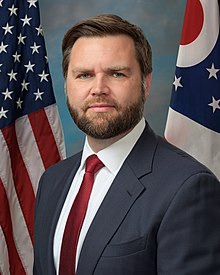
would be, if elected, either 1) the first Vice President with a beard since 1933 or 2) the first Vice President with a beard since U.S. Grant's Schuyler Colfax.
Both wrong.
The Vice President who left office in 1933 was Charles Curtis, and he had not a beard but a mustache:
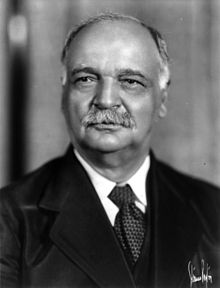
Facial hair, yes; beard, no.
The most recent Vice President with a beard was not Colfax, who left office in 1873, but Charles W. Fairbanks, who left office in 1909 and looked like this:

Fairbanks shaved his cheeks, leaving his beard unattached to his top-of-head hair, but lots of men even today wear beards like that; they're still beards.
Incidentally, Vance's beard is nothing like Lincoln's. Lincoln shaved his mustache. Look:

He probably did that because in his day the mustache was firmly associated with military men, and even with a beard (which the archetypal military man did not wear), he didn't want to be associated with the military, resulting in a style of beard most associated with clergymen. Or, more recently, with this guy:

No, the other beard-wearer whom Vance most closely resembles is this guy:

Stephen Colbert suggested that, since DT couldn't choose that guy as his running mate, he picked the closest thing available, the one who'd play him in the Lifetime movie.
Two more things about Vance:
First, he's one of those people who gives Tolkien fandom a bad name. To political criticisms of Tolkien like Michael Moorcock's I have traditionally responded, "Tolkien isn't asking you to vote for him." Well, Vance is the kind of guy who doesn't realize that Tolkien isn't asking you to vote for him.
Second, Wikipedia is currently disputing the question of whether he should be listed as J.D. Vance, J. D. Vance, or JD Vance. Really they are.
would be, if elected, either 1) the first Vice President with a beard since 1933 or 2) the first Vice President with a beard since U.S. Grant's Schuyler Colfax.
Both wrong.
The Vice President who left office in 1933 was Charles Curtis, and he had not a beard but a mustache:
Facial hair, yes; beard, no.
The most recent Vice President with a beard was not Colfax, who left office in 1873, but Charles W. Fairbanks, who left office in 1909 and looked like this:
Fairbanks shaved his cheeks, leaving his beard unattached to his top-of-head hair, but lots of men even today wear beards like that; they're still beards.
Incidentally, Vance's beard is nothing like Lincoln's. Lincoln shaved his mustache. Look:
He probably did that because in his day the mustache was firmly associated with military men, and even with a beard (which the archetypal military man did not wear), he didn't want to be associated with the military, resulting in a style of beard most associated with clergymen. Or, more recently, with this guy:
No, the other beard-wearer whom Vance most closely resembles is this guy:
Stephen Colbert suggested that, since DT couldn't choose that guy as his running mate, he picked the closest thing available, the one who'd play him in the Lifetime movie.
Two more things about Vance:
First, he's one of those people who gives Tolkien fandom a bad name. To political criticisms of Tolkien like Michael Moorcock's I have traditionally responded, "Tolkien isn't asking you to vote for him." Well, Vance is the kind of guy who doesn't realize that Tolkien isn't asking you to vote for him.
Second, Wikipedia is currently disputing the question of whether he should be listed as J.D. Vance, J. D. Vance, or JD Vance. Really they are.
Thursday, July 18, 2024
not my day
I've been having online vendor problems.
Last night I went to my health care website to order some medication refills, only to find that the system had no record of my having any prescriptions on file at all. I called the help line, and after having gotten trapped several times in automated subsystems I didn't intend and having to hang up and call again to get out, finally reached a person by repeatedly pressing 0. Of course they couldn't fix it themselves, but they reset my account and then sent a trouble ticket to IT.
This morning I tried again and it worked OK.
Then I went to our grocer's website to place our big weekly order for pickup tomorrow. I was halfway through choosing the substitutes (you want to do this, otherwise if your item is unavailable they're sure to pick a substitute you don't want) when I started getting flashing messages that most of our items were not on the shelf, and then the substitute lists went blank, then the entire order disappeared. When I tried again, it wanted me to log in in a different way than I ever had before, and when I gave the information it said "Are you sure you want to change to a business account?" What? No! Start over yet again, redo the entire thing, it worked this time.
Let's see what happens when I go to pick it up in the morning. All kinds of weird things often happen at that stage.
Nothing went wrong in logging in to my monthly Zoom conversation. When I arrived, everyone else was discussing one person's acquisition of a new pet animal. They were already into the conversation, and nobody said for a while what kind of animal it was, dog cat or ?? When someone said the word "puppy," I had the weird sensation of feeling the wave function collapse.
But then B. came in and reported that her car was ready, which was a surprise because the shop had told her it wouldn't be done until tomorrow. But we had to go now to pick it up before they closed, so I had to bow out of the meeting.
I haven't been watching the RNC. I am not interested in what Republicans have to say. I am only watching the late-night comedians' reports, and skipping over the tape clips, also the parts where they irritatingly imitate DT's voice.
I see that Bob Newhart died. He was always very funny in a quiet, sneak-up-from-behind way, but I was never a big fan of his, because I found his calculated stutter to be too irritating to listen to for very long. I didn't like it much from Hugh Grant, either. It's entirely different when someone stutters naturally because they can no other - in any case the natural stutterers I've known don't sound like that.
Last night I went to my health care website to order some medication refills, only to find that the system had no record of my having any prescriptions on file at all. I called the help line, and after having gotten trapped several times in automated subsystems I didn't intend and having to hang up and call again to get out, finally reached a person by repeatedly pressing 0. Of course they couldn't fix it themselves, but they reset my account and then sent a trouble ticket to IT.
This morning I tried again and it worked OK.
Then I went to our grocer's website to place our big weekly order for pickup tomorrow. I was halfway through choosing the substitutes (you want to do this, otherwise if your item is unavailable they're sure to pick a substitute you don't want) when I started getting flashing messages that most of our items were not on the shelf, and then the substitute lists went blank, then the entire order disappeared. When I tried again, it wanted me to log in in a different way than I ever had before, and when I gave the information it said "Are you sure you want to change to a business account?" What? No! Start over yet again, redo the entire thing, it worked this time.
Let's see what happens when I go to pick it up in the morning. All kinds of weird things often happen at that stage.
Nothing went wrong in logging in to my monthly Zoom conversation. When I arrived, everyone else was discussing one person's acquisition of a new pet animal. They were already into the conversation, and nobody said for a while what kind of animal it was, dog cat or ?? When someone said the word "puppy," I had the weird sensation of feeling the wave function collapse.
But then B. came in and reported that her car was ready, which was a surprise because the shop had told her it wouldn't be done until tomorrow. But we had to go now to pick it up before they closed, so I had to bow out of the meeting.
I haven't been watching the RNC. I am not interested in what Republicans have to say. I am only watching the late-night comedians' reports, and skipping over the tape clips, also the parts where they irritatingly imitate DT's voice.
I see that Bob Newhart died. He was always very funny in a quiet, sneak-up-from-behind way, but I was never a big fan of his, because I found his calculated stutter to be too irritating to listen to for very long. I didn't like it much from Hugh Grant, either. It's entirely different when someone stutters naturally because they can no other - in any case the natural stutterers I've known don't sound like that.
Subscribe to:
Posts (Atom)