Wednesday, December 15, 2021

Christmas book booty

Here's the Christmas presents we got for a pair of grand-nieces, ages seven and five. A lot of books.

Presents for Ally and Auri

We didn't actually buy these. What these girls might want to read is not our expertise. We sent their parents a wad of money, and they went shopping, and sent us this photo.

One item that particularly intrigued me is the one labeled Raya and the Last Dragon, which I hadn't heard of despite its bearing the Disney logo. So I looked it up, and it turned out to be a Disney animated movie released earlier this year which hadn't come to my attention. So since we have the Disney+ channel, I watched it.

Interesting, he said, chewing slowly. It's another Disney ethnic badass princess movie, in fact it's got two of them battling for the same McGuffin, which (a few plot complications aside) they both want to do the same thing with, so the whole battle is actually a giant misunderstanding, which they figure out in time for the fuzzy happy ending. This ending makes no sense in terms of the opening setup, which I can only assume the filmmakers hope you only vaguely remember by the end.

The McGuffin is a jewel which the dragons had concentrated all their power into. This sounds disturbingly like Sauron's methodology for making the One Ring. Despite the more benevolent intent, this also has its dire consequences.

Disney formed the ethnicity by throwing bits of every Southeast Asian culture they could think of into a bowl and mixing them up. It works OK, and some of the animation is excellent: I especially liked the expressions on the face of the big tough warrior guy from Spine.

Oh yes, there's five kingdoms, each named for a body part of a dragon. One of them is Spine. Spoken aloud as a place name, it sounds like a Cockney on vacation.

Tuesday, December 14, 2021

West Side Stories

Despite receiving good reviews, the new Spielberg movie version of West Side Story is reported as not doing well at the box office. That's why I decided to go see it today (a nearly deserted matinee, like the one at which I saw Dune): both to contribute my mite towards its receipts and to see it on screen while I still could, as it's likely to disappear soon.

And to facilitate comparison, I streamed the Wise/Robbins 1961 film from Amazon first.

To my mind, West Side Story exists for the glory of its music. And for that, you don't want to see either movie. You want a good recording of the stage show, like the MTT/SFS live version I attended the concert of several years ago and snapped up as soon as it appeared on CD. The 1961 movie suffered from a crass and overblown orchestration that composer Leonard Bernstein hated, and the sound quality, though it won an Oscar, of 60-year-old celluloid is crude and tinny next to a good CD or LP. The new film's songs have quiet and tasteful orchestrations that, if anything, undersell the songs.

Most of the reviews are about the way the new movie handles the ethnic relations, so I'll let them discuss that and add only one thing, concerning the replacement of the character Doc with his (newly conceived, I think) widow, Valentina, who is played by Rita Moreno. A great way to honor this veteran of the earlier film, but it doesn't seem to have occurred to anybody that having had Doc, a white man, marry a Puerto Rican serves as a precedent that undercuts the transgressiveness of Tony and Maria's romance. That's something that Peter Jackson would do, and there's few stronger negatives in film criticism in my vocabulary than that comparison.

Tony Kushner's screenplay is an astronomical-scale improvement on the truly sucky dialogue of the earlier movie, and Kushner does two other things I really liked. One is to set the marriage scene on a date on which Tony takes Maria up to the Cloisters. I took B. up to the Cloisters on our only trip to NYC together, and we had a wonderful time even though we were already married. The other truly admirable thing was to intensify and focus the character of Bernardo and his anger at his sister's romance. When Bernardo tells Tony at the rumble that Tony just wants to claim a "brown girl" (Bernardo's words) as his right as a white man, that really bites hard and shows what's generating the anger.

In the later part of the story, the build-up to the final tragedy, Kushner pretty much follows the existing outline, except that he sets "I Feel Pretty" immediately after the rumble instead of before it, an incongruity which destroys the building tension and may be responsible for my feeling that this movie, despite the superior dialogue, doesn't intensify that tension as well as the older movie does.

The dancing, choreographed by Justin Peck, is Jerome Robbinsy in general affect without being quite so intensely so as work by the original, and consequently feels less unreal in scenes like the opening gang walk and the mixer dance. Setting "America" as an outdoor street scene works very well.

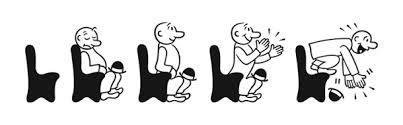
The little man isn't giving a standing ovation but he is at least sitting up alertly.

Monday, December 13, 2021

concert review: Campbell String Ensemble

B. and I took an odd little outing this afternoon. Some of the other string players she's encountered in TACO also belong to a 25-member group called the Campbell String Ensemble, which takes the form of an adult education class at a local high school near to, but not in, the town of Campbell. Their final class of the term is given as a public concert, though they don't advertise this well, and B. had to make several enquiries to confirm it.

But to the school's not-overlarge auditorium we ventured this afternoon to find a printed program sheet, the houselights going down when the rehearsal ended, and introductions to each piece spoken by orchestra members not one of whom had any idea how to hold a microphone correctly and were consequently mostly inaudible.

For a totally amateur group, they had impressively good intonation, always within hailing distance of where it should be, but ensemble and rhythm could use work, despite the textbook-clear time-beating of the conductor, Anne Spector. The fugal texture in their rendition of the finale of Brandenburg Four was irresistibly reminiscent of a cat with a ball of yarn. Corelli's Christmas Concerto - the whole thing, though its extreme tempo contrasts were beaten into submission - went rather better.

The best performances were of a couple of pieces based on American folk fiddling, one of them by Jay Ungar. Also on the program were Shostakovich's Waltz No. 2, a favorite of mine; one seasonal carol (The Holly and the Ivy); and the obligatory annoyingly ecumenical entry of a medley of Hanukkah songs. I only knew one of the three and that not well. Well, the concert as a whole was enjoyable and I'm glad we went.

It being pressing towards dinnertime by the ending, we detoured on the way home to pick up take-out Chinese, cautiously proceeding through the dark and the rain which has made a reappearance locally this week. It's been quite a while since I've driven through both dark and rain at once. I do wish that "fake it till you make it" (or "till you see it") were not so necessary regarding lane markings in these conditions.

Sunday, December 12, 2021

yes, again again

The good fellow who's been watching his way through all the Hugo-winning (and Oscar Best Picture-winning, too) movies has reached Peter Jackson et al's The Two Towers. I responded to his enthusiasm for Fellowship here (with a link). I have less to say about his comments on The Two Towers because this time, he's figured out some of the problems with these movies.

This despite the fact that, unlike N., I consider The Two Towers to be the best of the set. This was the one which, when I went to see it at first run, I couldn't find an empty seat in the packed theater and watched it sitting on the carpet in an unoccupied wheelchair alcove, spending half the time marveling at the spectacle and grandeur, and half the time curled up on the floor whimpering in agony over everything else. That I still found it the best of the three movies should convey just how bad an adaptation the whole mess was.

(B. will say, "Wait a minute. We saw this together, and I don't remember anything about curling up in a wheelchair alcove." I didn't tell her this at the time, but with her was the second time I saw the movie. I had to see it again, because I couldn't believe my eyes from what I saw depicted on screen the first time.)

N. is properly critical of the adaptation of Faramir. J-Faramir, completely unlike his book counterpart, tries to arrest Frodo and Sam and take the Ring to Minas Tirith, and then inexplicably changes his mind and lets them go. I'd like to get into this from a couple levels, because I think it's the key to Jackson et al's failure.

I recently conversed with a man who said that listening to the film-makers' commentary on this scene is what finally enabled him to understand why the movies made the changes they did and forgive them. That's dismaying, I said, because I listened to the same commentary track and found it the final proof that the writers did not understand or appreciate Tolkien's book. To change a plot point because you consider it necessary for the adaptation is one thing; to change it because you can't figure out why the author wrote it that way is another.

What Jackson (or Boyens? I forget which of them was speaking, but I think both of them made this point) said is that, if the Ring is so powerful and seductive, it doesn't make sense for Faramir to avoid succumbing to its seduction. We lose a sense of the Ring's power, they said. Tolkien really fell down on that point and we can't figure out why, they said.

Boy o boy, they didn't read the book very closely, did they? Faramir himself answers this question, when he says, "I am wise enough to know that there are some perils from which a man must flee." His reaction doesn't diminish the Ring's power, it underlines it. Look, here's a weapon that could by itself win the war, a war which at this point the good guys are losing badly. And yet any good characters who have the power to wield the Ring adequately won't touch the thing. I think that avoidance conveys the danger of the Ring a lot more vividly than an endless series of Boromirs and Gollums falling victim to its lure would.

J-Faramir's lapse, for momentary lapse is what it turns out to be in the storyline, is illustrative of a continuing theme which is the movies' greatest continuing flaw. They keep having the good characters suffering failures of nerve. Faramir seizing the Ring, Gandalf socking Denethor in the teeth, the Rohirrim fleeing away from Saruman, Aragorn fearing he's too weak to be king, Frodo abandoning Sam in the wilderness because he no longer trusts him, Legolas having a nervous breakdown at the Battle of Helm's Deep (I bet you've forgotten that, but it's there), all seem to be serving the purpose of "humanizing" the characters by showing them as having weaknesses.

Jackson et al have missed the point and the structure of Tolkien's story. Gandalf and Aragorn, even Faramir and Legolas, are not the protagonists or heroes of Tolkien's story. The four hobbits are, or more accurately including Frodo in the first half: by Book 4, Frodo's burden has translated him beyond hobbit-kind, which is why so much of the viewpoint then focuses on Sam. It's the hobbits who suffer failures of nerve: see Sam fretting over what to do at Cirith Ungol, or Merry going nerveless at facing the Nazgul - which he does twice, by the way; I bet you've forgotten that too. Faramir and the others have already gone through any crisis of self-faith they're going to have before we meet them; and they've come out stronger for it. Their purpose in the story, from a structural viewpoint, is not to be the heroes but to provide noble figures, above quotidian heroism, for the hobbits to look up to and try to emulate. In the end the hobbits succeed at this (much of it shown in the Scouring, and where's that in the movie?). To excise this theme is to lose the moral heart of Tolkien's story.

There's further the problem of the half-hearted way Jackson pursues this. He wants to make his Faramir do something that Faramir would never do. But because Tolkien would never have Faramir do this, it changes the story utterly. But Jackson doesn't want to change the story, he wants to stick to Tolkien's outline as best he can. So he allows the story to run off the rails briefly, and then he has to wrest it back on to the rails by main force in order to continue with Tolkien's outline. That's Jackson's external reason, but he fails to come up with an internal one, so that's why J-Faramir's change of mind is so inexplicable.

This kind of problem happens again and again in the series, but especially in this installment. Aragorn falling off a cliff, also mentioned by N., though not involving lack of nerve is another example.

There's a further problem, which is that Jackson et al have not thought through what would have happened if Faramir had seized and kept the Ring. In the book, Denethor is pretty bitter when he learns that Faramir let Frodo go. He says that Boromir wouldn't have done that. "He would have brought me a mighty gift," and you know what that gift would have been. But Gandalf says it would not have worked out that way. "You deceive yourself. He would have stretched out his hand to this thing, and taking it he would have fallen. He would have kept it for his own, and when he returned you would not have known your son."

That's a chilling thought, and that takes us to Gollum, the treatment of whom is N.'s greatest praise of this film.

Well, no question, Andy Serkis is a great actor. His brief turn as the imprisoned mass murderer Ian Brady in the movie Longford is one of the most bone-chilling things I've ever seen on screen. A character like that needs to radiate evil, and Serkis's Brady radiates more pure evil per square inch than anybody. But he's equally fine as the foppish dancing master in Topsy Turvy.

But while Serkis understood these characters, he had a little trouble being Gollum. He's been quoted as saying that, in figuring out why Gollum made his "gollum" sound, he decided that Gollum was like a cat emitting a hairball. So J-Gollum talks like a strangulated cat. Can that be right?

And we also have this scene, praised by everybody and not just N., of the conversation between the two sides of Gollum's personality. Given Serkis's interpretation of Gollum, he acts this very well. The problem which everybody misses is in the writing and direction of the scene. The conversation is in the book, yes, but as usual Jackson et al totally misunderstand it. In the book it's an internal debate between two impulses within the same character. But Jackson frames it so that it looks as much as possible as if they're two people. Most astonishingly, almost the entire scene is cut as back-and-forth shots between the two personalities, as if they really are physically separate. And then at the end when Smeagol tells Gollum, "Go away and never come back," the direction to "go away" again implies that he's separable.

The result is that almost everybody, including myself above ("Smeagol tells Gollum"), writes as if they're two people. It feeds the mistaken impression that, as even Stephen Colbert has maintained, that Smeagol and Gollum were not the same being, but that Gollum was a different creature that Smeagol transformed into. That is not the case. Smeagol always remained Gollum's "real" name, and he would even answer to it in his better moods. Gollum was not an alien being that took over Smeagol against his will, but the manifestation of Smeagol's own character under the influence of the Ring. So it's erroneous to think, as Colbert does, that Smeagol had been a kind or friendly character. That doesn't sound like the Smeagol in Gandalf's report on the history of the Ring, or in Tolkien's letters, as I describe in the above link.

Two points specifically about the book. N. praises Tolkien for avoiding "middle-book syndrome," in which the middle book of a trilogy is mostly padding to get the characters through so many thousand words. I'd like to point out that this may be because Tolkien didn't write a middle book. He wrote The Lord of the Rings as one long book. It was divided into three volumes only by the necessities of publishing. And everybody since, not just Jackson, has mistaken it for a trilogy.

Lastly, N. notes that Tolkien "plotted out the movements of the characters against the calendar meticulously, and the fact that he has done his homework is modestly obvious." Yes, and that supplemental issue of Tolkien Studies we're about to publish will present the documentary evidence of Tolkien doing exactly that.

Tuesday, December 7, 2021

sell anything

When I saw the recent Green Knight movie, the one with Dev Patel, I bought my online streaming ticket from an online movie vendor called A24 which, like all online vendors from which you buy anything, thinks that means you're interested in everything they sell so they send you endless marketing e-mails.

I haven't turned that one off yet, because I thought maybe I might be interested in some other movies of theirs, though that hasn't happened yet. But I did just get another mailing from them about The Green Knight, touting this dour, somber movie as "A new Christmas classic." It says, "Get tickets and make merry today." Make merry? Did anybody at the marketer actually see the movie?

Also, it tells you that "The Green Knight Collection, including The Green Knight: A Fantasy Roleplaying Game, Green Knight Tree Face Pin, Original Motion Picture Soundtrack, Fantasy Genre Candle, and more now in the shop." Where is Stan Freberg when we need him?

Monday, December 6, 2021

cat trauma

Maybe our cats have PTSD. They went to the vet this morning, and didn't they howl, locked up in their cat carriers - all the way there, and all the way back too. (The late Pandora at least used to quiet on the return, having figured out that she was going back home.)

Now they're crying for attention and love, all the more so because both of us were out for a while this evening. (B. was at rehearsals for her orchestra concert in March; I was attending a student chamber music recital at Stanford: I usually enjoy these, but this time the anemic performances of powerful music were a bit much, or rather a bit not enough.) We're doing our best to console and worship the cats.

Sunday, December 5, 2021

reading without eating

More due to other health issues in the host household, I think, than covid concerns, our Mythopoeic Society group's annual Reading and Eating meeting was by Zoom again this year. That did mean our most faithful ex-member, now far out of state, could attend; all together there were, I think, 9 of us, which would have been small enough to spread out had we been there in person.

Readings ensued, but the eating was up to ourselves. I was actually still finishing lunch when the meeting started, so I kept my camera off until I'd finished. Best reading contribution: L. with a witty and imaginative poem of her own composition in the form of a Gorey alphabet. C. read a Charles Williams Taliessin poem in memory of A., and showed just how powerfully affecting this work can be. I offered something just a week or so out of date, Matt Taibbi's defense of Thanksgiving. And I didn't even have to print it out to read it.

A gratifyingly large number of suggestions for next year's book discussion topics, instead of sitting around and looking blank when the question came up. Next up, in March: Maria Dahvana Headley's Beowulf translation.

Saturday, December 4, 2021

opera review: Cosi fan tutte

I'm not often at the opera, but I was up at the SF Opera last night for their current (this was the last of 5 performances) production, and I enjoyed it all the way through, which counts as a huge success for me and opera. Lisa of the Iron Tongue had called this "one of the best things you will ever see" and "one of the best-conceived, best-performed, and best-conducted Mozart productions of the last 25 or so years" and Mozart is one of the two standard-repertoire opera composers I've enjoyed before (the other is Rossini), so I decided to go.

The production was set in a country club in the 1930s. Unfortunately the venue, the War Memorial Opera House (that's WW1 it's memorializing) also dates from the 1930s, which is why I didn't suggest that B. come along, much though she loves Cosi. Physically navigating it was nightmarish enough when we were last there 20 years ago, younger and spryer. Though I think they've replaced the seats since then, which helps, but getting to the restroom ... my word.

On stage, though, all was bright and cheery. The design, the sets and costumes, were sprightly and imaginative. Scenes set in an exercise class or by the pool, with silly costumes and behavior by the chorus members; the first entrance of the previously dignified men (Ben Bliss and John Brancy) in disguise, slinking in with fur coats, cowboy hats, and waxed mustachios; or the women (Nicole Cabell and Irene Roberts) failing to play badminton because they're too depressed to hit the shuttlecock, were funny in themselves. When Despina (Nicole Heaston) appears in disguise as a doctor, she's in 1930s golfing attire and trailing a wheeled golf bag, because what else would a doctor be doing at a country club?

The music moved along vigorously, propelled by Henrik Nanasi's fine conducting and good orchestra work. (The opera orchestra here is certainly much better than the ballet orchestra.) The many arias and duets did not drag, as they could have; and the ensemble pieces - the part of opera I much prefer - absolutely sizzled in the first half of Act 1 Scene 2, which was pure genius from both composer and performers. I've never heard anything in a standard repertoire opera I enjoyed more than this rendition of these numbers.

The singing was powerful and expressive throughout, with only a slightly subdued quality in a few places revealing any weak spots. Could Don Alfonso (Ferruccio Furlanetto) have been a more powerful bass? Possibly. Don't ask him to play Il Commendatore, that's my only advice. He was good enough here as the puppetmaster. Top performing marks go to Ben Bliss as Ferrando; his tenor was the strongest voice in the cast, a gratifying thing to be able to say of a tenor; and he expressed emotion the most effectively in his arias. Everyone else was also good, though resemblances in costume, appearance, and voice meant I sometimes had trouble remembering which was Fiordiligi and which was Dorabella. The characters seemed to have a little trouble figuring out how to match up, too, even before the men go into disguise. I think that was part of director Michael Cavanagh's attempt to subvert the misogynistic plot, but for the most part this show came off as brushing the plot off, which is pretty much what one's forced to do.

Friday, December 3, 2021

concert review: San Francisco Symphony

Guest conductor Simone Young roared through Tchaikovsky's Symphony No. 5 like an Australian speed demon at Davies last night. She started fast and got faster, galloping through the finale as if trying to fit the whole movement on a single 78. Or perhaps she was just trying to get it over before the next time a cell phone went off, which happened frequently.

In sound quality this was a traditional Fifth, big and full-bodied, not like any of the crunchy emaciated things we've sometimes heard lately. Solos were pleasingly on-point, because this is the SFS.

Prior to that, Christian Tetzlaff waxed smoothly and eloquently through Elgar's Violin Concerto. But that's about all I can say about this performance of a piece which, like most of Elgar's major works, leaves me cold and uninvolved. Not so the usher at the main door to the seating section, who told anyone who would listen that this concerto always makes him cry.

Thursday, December 2, 2021

Hanukah at home

B. and I are hermits; we rarely have anybody over to our tiny Minnipin Cottage. A few overcrowded book group meetings pre-pandemic were the only exception. Except that, when my mother was still around, we'd have her over once a year at Hanukah for latkes and matzo ball soup. One year we had B.'s mother over at the same time. That worked well and we would have repeated it, but they're both gone now, and except for one try a few years ago with B.'s sister and her husband - they liked everything, even the gefilte fish, which I doubt either of them had ever heard of before - which didn't really count as it was at their house though I cooked, we hadn't done it since.

But I've been trying to find more occasion to see my local brother and my nephew, so we had them over last night. (Sister-in-law is in health care and works evenings.) N. is now 6, 7 in 2 months, and easier to communicate with than I found when he was younger, He was hyper, didn't eat much, and was only happy watching endless animated time-lapse videos about the evolution of the universe (about which he's quite well-informed; even knows what a quadrillion is) which he kept insisting that I look at while pointing the screen of his tiny device in the wrong direction. But did we have a good elderly-uncle and very-young-nephew time? I think we did. N. wants to come back, which is a good sign, though we think maybe not as soon as he has in mind.

Meanwhile my brother J. was anxious about propitiating his son's moods, to keep him occupied, and himself ate some of everything and was on his best behavior. You don't want to hear stories about what he's like when he's not on his best behavior, which used to be most of the time, but we had good conversation. J. and B. are both Silicon Valley techies by profession which I'm not, so they could converse about computer chips, and when J. asked us why leftists are so upset with the Kyle Rittenhouse verdict, it was because he genuinely wanted to know, not to troll us with objections as he does with philosophical topics like "If God is omniscient, how can there be free will?" Be assured, readers, that he got a substantive earful of an answer.

But whew, making room in our cluttered dining area for dinner guests and otherwise preparing everything was exhausting, so any thoughts of repeating this with B.'s sister will have to wait till next year, and then what takes priority?

The cats disappeared upstairs as soon as J. and N. arrived, and reappeared as soon as they left.